.png)


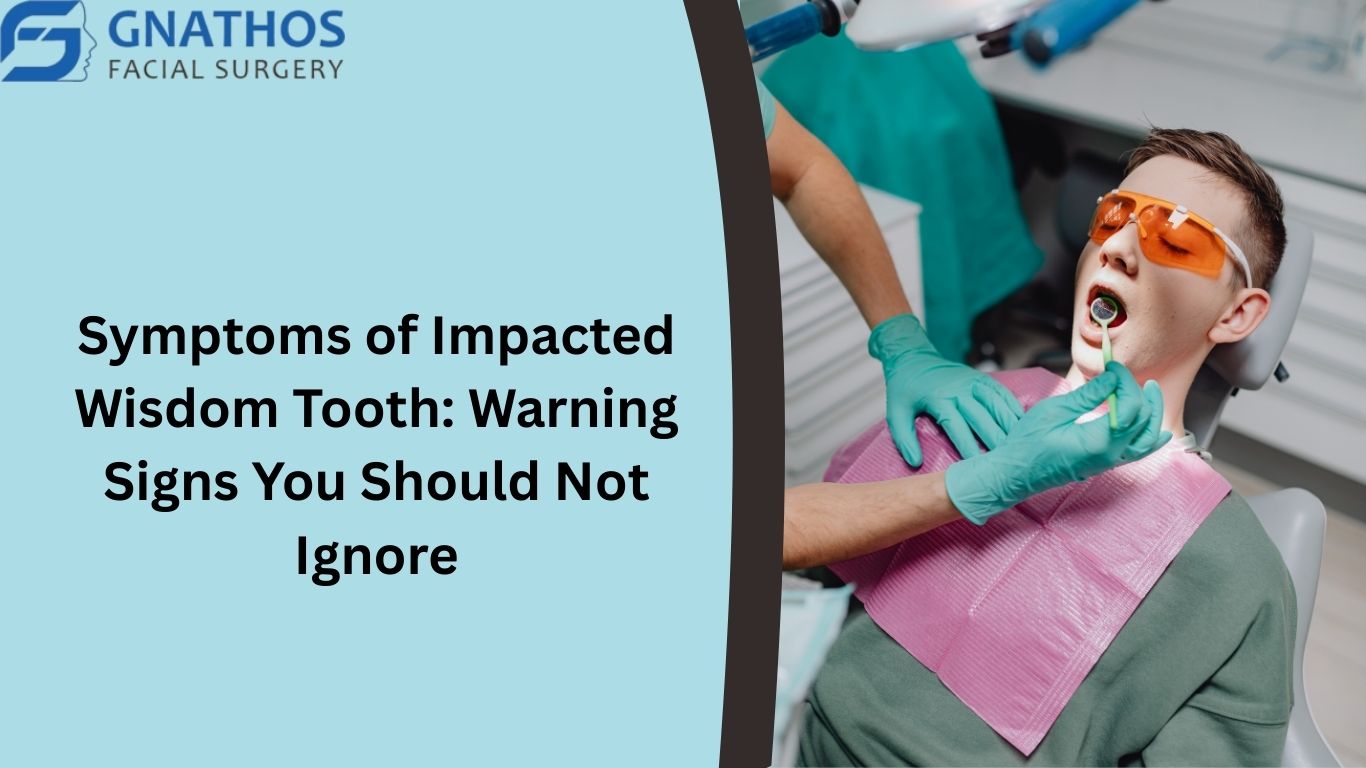
Wisdom teeth, also known as third molars, usually erupt between the ages of 17 and 25. While some people experience no problems, many develop impacted wisdom teeth, a condition where the tooth fails to emerge properly due to lack of space, abnormal position, or obstruction by nearby teeth or bone. An impacted wisdom tooth can remain partially visible or completely trapped beneath the gums, leading to pain, infection, and damage to surrounding teeth.
Many patients ignore early impacted wisdom tooth symptoms, assuming mild pain or gum discomfort is temporary. However, untreated impacted wisdom teeth can cause serious oral health problems, including recurring infections, jaw pain, cyst formation, and damage to adjacent molars. Recognizing the warning signs early is essential to prevent complications and avoid emergency dental or surgical treatment.
This blog explains the common symptoms of impacted wisdom teeth, how these symptoms progress, and when you should seek professional help.
What Is an Impacted Wisdom Tooth?

An impacted wisdom tooth is a third molar that does not have enough space to erupt normally. It may grow at an angle, press against the neighboring tooth, or remain trapped under the gum or jawbone. Impacted wisdom teeth can be classified as partially impacted, where part of the tooth is visible, or fully impacted, where the tooth is completely hidden.
Because of their position at the back of the mouth, impacted wisdom teeth are difficult to clean, making them prone to infection and inflammation.
Common Symptoms of Impacted Wisdom Tooth
Pain at the Back of the Mouth
Pain near the last molar is the most common symptom of an impacted wisdom tooth. The discomfort may be mild at first but can gradually worsen. Pain often radiates to the jaw, ear, or temple and may intensify while chewing or opening the mouth wide.
Swollen or Red Gums
Inflammation of the gums around the impacted tooth is a frequent warning sign. The gums may appear red, swollen, and tender to touch. In partially impacted teeth, bacteria can easily enter the gum flap, leading to infection.
Jaw Stiffness and Difficulty Opening the Mouth
Impacted wisdom teeth can cause jaw stiffness, especially in the morning or after eating. Some patients experience difficulty opening their mouth fully, which may indicate inflammation or infection spreading to nearby tissues.
Bad Breath and Unpleasant Taste
Persistent bad breath or a foul taste in the mouth may occur due to food particles and bacteria trapped around the impacted tooth. This symptom often signals an underlying infection that requires prompt attention.
Pain Patterns Associated With Impacted Wisdom Teeth
Pain from an impacted wisdom tooth is not always limited to the tooth area. Many patients report pain that spreads to surrounding regions.
Ear Pain
Because of shared nerve pathways, impacted wisdom teeth can cause ear pain or a sensation of pressure in the ear, even without an ear infection.
Headaches and Temple Pain
Persistent pressure from an impacted tooth may lead to headaches, particularly around the temples. These headaches often worsen during chewing or jaw movement.
Neck and Throat Discomfort
In severe cases, infection around an impacted wisdom tooth may spread, causing discomfort in the neck or throat and making swallowing painful.
Signs of Infection Around an Impacted Wisdom Tooth
Pus or Discharge
The presence of pus around the gum line is a clear sign of infection. This symptom should never be ignored, as it may indicate an abscess.
Fever and General Discomfort
A low-grade fever, fatigue, or feeling unwell may occur if the infection spreads beyond the local area.
Swollen Lymph Nodes
Swelling in the lymph nodes under the jaw or in the neck may be seen during active infection related to an impacted wisdom tooth.
Less Obvious Symptoms You Should Not Ignore
Some symptoms may appear unrelated but can still be linked to impacted wisdom teeth.
- Increased sensitivity in nearby teeth
- Bleeding gums around the last molar
- Difficulty chewing on one side
- Sudden changes in bite alignment
- Facial swelling on one side
These warning signs often indicate that the impacted tooth is affecting surrounding structures.
Types of Impacted Wisdom Teeth and Symptoms
| Type of Impaction | Position of Tooth | Common Symptoms | Risk Level |
|---|---|---|---|
| Soft tissue impaction | Tooth covered by gum | Gum pain, swelling, infection | Moderate |
| Partial bony impaction | Tooth partly in bone | Pain, gum infection, bad breath | High |
| Complete bony impaction | Tooth fully in bone | Jaw pain, cyst risk | High |
| Horizontal impaction | Tooth grows sideways | Severe pain, damage to nearby tooth | Very High |
How Impacted Wisdom Teeth Are Diagnosed
Diagnosis begins with a clinical examination of the mouth and gums. Dental X-rays or panoramic imaging are used to determine the position of the wisdom tooth and assess its impact on nearby teeth and bone. Accurate diagnosis helps decide whether monitoring or surgical removal is required.
When to Seek Help for Impacted Wisdom Tooth Symptoms
You should seek professional evaluation if pain persists for more than a few days, swelling increases, or signs of infection such as fever or pus appear. Delaying treatment can result in severe infection, jaw damage, or complications requiring emergency care.
Patients experiencing recurrent discomfort at the back of the mouth, especially on one side, should not ignore these symptoms, even if pain subsides temporarily.
Treatment Options for Impacted Wisdom Teeth
Treatment depends on the severity of symptoms and the position of the tooth. Asymptomatic impacted teeth may be monitored, while symptomatic or infected teeth often require surgical removal. Early intervention reduces recovery time and lowers the risk of complications.
Self-Care Measures for Temporary Relief
While waiting for professional care, mild symptoms may be managed with warm saltwater rinses, good oral hygiene, and avoiding hard or sticky foods. However, self-care should not replace proper medical or dental treatment.
Frequently Asked Questions (FAQs)
How do I know if my wisdom tooth is impacted?
Persistent pain, swelling, gum inflammation, or difficulty opening the mouth may indicate an impacted wisdom tooth, confirmed by X-rays.
Can impacted wisdom teeth cause jaw pain?
Yes, impacted wisdom teeth commonly cause jaw pain and stiffness due to pressure and inflammation.
Is bad breath a sign of impacted wisdom tooth infection?
Yes, trapped bacteria around an impacted tooth can cause persistent bad breath or a foul taste.
Do all impacted wisdom teeth need removal?
Not all impacted wisdom teeth require removal, but symptomatic or infected teeth usually do.
What happens if impacted wisdom teeth are left untreated?
Untreated impacted wisdom teeth can lead to infection, cysts, damage to nearby teeth, and jaw complications.
When is the best age to remove impacted wisdom teeth?
Removal is often easier and recovery is faster in late teens or early twenties, but evaluation is necessary at any age.
Conclusion
Symptoms of an impacted wisdom tooth should never be ignored. What starts as mild discomfort can quickly progress into infection, severe pain, and complications affecting oral and overall health. Recognizing early warning signs such as jaw pain, gum swelling, bad breath, and difficulty opening the mouth allows timely treatment and prevents serious problems.
If you are experiencing persistent pain or swelling at the back of your mouth, seeking professional evaluation can help protect your oral health and prevent long-term complications.