
A great surgeon is the single biggest factor in your result. The best maxillofacial surgeon in Hyderabad for you is the one who treats your specific condition often, plans with modern imaging, works with an experienced team, and explains your options clearly — not the one with the loudest ads or the lowest fee.
format_list_bulletedTable of Contents
- arrow_rightWhy Hyderabad Is a Leading Hub
- arrow_rightRecognised Hospitals in Hyderabad
- arrow_rightQualifications That Matter
- arrow_rightExperience, Case Volume & Technology
- arrow_rightHow to Verify Credentials
- arrow_rightEvaluating the First Consultation
- arrow_rightQuestions to Ask
- arrow_rightCosts & Insurance
- arrow_rightReading Reviews & Testimonials
- arrow_rightThe Role of the Team
- arrow_rightTravel & Accommodation
- arrow_rightRed Flags
- arrow_rightWhy Gnathos Facial Surgery
- arrow_rightFrequently Asked Questions
Why Hyderabad Is a Leading Hub for Maxillofacial Surgery
Hyderabad has become one of India's most trusted destinations for maxillofacial and orthognathic surgery, and the reasons go beyond cost. The city brings together a high concentration of fellowship-trained maxillofacial surgeons, NABH-accredited multi-speciality hospitals, modern 3D imaging and virtual surgical planning (VSP) labs, and a mature medical-tourism ecosystem. Patients travel here from across India — and from the Middle East, Africa, and South-East Asia — because they can access subspecialty expertise (jaw surgery, TMJ surgery, facial trauma, and facial cosmetic surgery) under one roof.
The presence of large teaching institutions, including units affiliated with the NTR University of Health Sciences and Kaloji Narayana Rao University, has built a steady pipeline of consultants who train, publish, and present at international forums such as the IAOMS and AO Foundation. This means a Hyderabad-based surgeon you choose for jaw surgery is likely to be current with global protocols — from virtual splint fabrication to piezoelectric osteotomy techniques.
Equally important, the city is well connected by air and rail, has a wide range of recovery-friendly accommodation, and is familiar with the needs of post-surgical patients (soft-diet kitchens, physiotherapy access, and follow-up scheduling). For many patients weighing Delhi, Mumbai, Bengaluru, and Chennai, Hyderabad offers the best balance of specialist depth, infrastructure, and value.
Recognised Hospitals & Specialty Clinics in Hyderabad
Hyderabad offers a mix of large multi-speciality hospitals and dedicated maxillofacial specialty centres. The hospital you choose matters as much as the surgeon — because anaesthesia, ICU cover, and the supporting surgical team all affect your safety and result.
- Apollo Hospitals (Jubilee Hills & other units): Large multi-speciality setup with dedicated maxillofacial units, in-house CT and CBCT, and an experienced anaesthesia and critical-care team. Well suited for combined orthognathic-cosmetic cases and complex trauma.
- KIMS Hospitals (Secunderabad & Kondapur): Strong oral and maxillofacial surgery department, modern operation theatres, and active virtual surgical planning workflow for orthognathic cases.
- Yashoda Hospitals (Somajiguda, Malakpet, Secunderabad): Known for facial trauma and reconstructive work, with reliable ICU and emergency cover for maxillofacial emergencies.
- Continental, Care, and Medicover hospitals: Mid-to-large multi-speciality hospitals with consultant maxillofacial surgeons on panel. Useful for second-opinion cases and cashless insurance.
- Specialist maxillofacial clinics (such as Gnathos Facial Surgery): Focused practices where every case is a maxillofacial case — orthognathic, TMJ, trauma, facial cosmetic, and dental implants — under one roof.
When comparing hospitals, ask whether the facility has in-house CT/CBCT, a dedicated maxillofacial OT team, a senior dedicated anaesthetist (not a shared pool), ICU cover, and a sterilisation protocol that meets NABH standards. These are non-negotiable for any major jaw or facial procedure.
Qualifications That Matter
Maxillofacial surgery in India sits at the intersection of dentistry and medicine, so you will see different training paths. The core recognised qualifications are MDS (Oral and Maxillofacial Surgery), DNB (MFS), and MCh (Head & Neck / Plastic Surgery with maxillofacial focus). Each is legitimate when the surgeon also has hands-on training in the specific procedure you need.
- Recognised university degree and active registration with the Dental Council of India or National Medical Commission
- Sub-specialty training in your procedure — orthognathic, TMJ, trauma, oncology, cleft, or cosmetic facial surgery
- Fellowship at a recognised centre in India or abroad (1–2 years of additional focused training)
- Active society memberships: AOMSI (Association of Oral and Maxillofacial Surgeons of India), IAOMS, AO Foundation, AOCMF
- Continuing education, recent publications, and teaching roles
For a clear primer on how maxillofacial surgery differs from general dentistry, see dentist vs maxillofacial surgeon. A useful way to think about it: a general dentist is to a maxillofacial surgeon what a family physician is to a cardiac surgeon — both are doctors, but the training pathway, case complexity, and surgical responsibility are entirely different.
Experience, Case Volume & Surgical Technology
The best surgeon for you is rarely the most famous one in the city — it is the one who performs your specific procedure regularly. Maxillofacial surgery is broad, and a surgeon who does 200 jaw surgeries a year is a different proposition from one who does 20.
- How many cases of your exact procedure has the surgeon done in the last 12 months?
- What is the surgeon's revision and complication rate, and is it discussed openly?
- Does the surgeon have a before-and-after portfolio of similar cases (with consent)?
- Does the surgeon publish, lecture, or teach on this topic?
- Is the supporting team — anaesthetist, OT staff, orthodontist — experienced in the same field?
For orthognathic surgery, ask specifically about 3D virtual surgical planning (VSP). VSP lets the surgeon rehearse the operation on a digital model of your skull, design custom guides and plates, and predict the final bite and facial shape before you ever enter the OT. Practices that still rely only on 2D model surgery are working with older standards. For TMJ surgery, ask about arthroscopy experience and total joint replacement volume. For facial trauma, ask about both acute and delayed reconstructive experience, and for cosmetic facial work, ask about rhinoplasty, genioplasty, or facelift volume and complication data. To understand what orthognathic surgery itself involves, read what is orthognathic surgery: purpose, procedure, and recovery explained.
Also ask whether the centre has an in-house CT or CBCT. The best maxillofacial practices do their own imaging on the day of consultation, which removes the guess-work of relying on old outside scans and ensures the surgeon plans on accurate, recent data.
How to Verify a Surgeon's Credentials
Verifying credentials is straightforward once you know where to look. Start with the basic registration: every practising surgeon must be registered with the Dental Council of India (for MDS-trained maxillofacial surgeons) or the National Medical Commission (for MCh- or MS-trained surgeons). Both councils have searchable online directories where you can confirm the surgeon's name, qualification, and registration status.
Next, look for evidence of ongoing academic work. A surgeon who publishes case series, presents at AOMSI or IAOMS conferences, or contributes to textbooks is keeping their practice current. You can search PubMed and Google Scholar for the surgeon's name, and check the websites of recognised maxillofacial journals (Journal of Oral and Maxillofacial Surgery, International Journal of Oral and Maxillofacial Surgery, Journal of Maxillofacial and Oral Surgery).
Society memberships also help. AOMSI membership indicates peer recognition; AO Foundation / AOCMF membership indicates specific trauma and reconstructive training. Fellowships at international centres — TMJ, cosmetic, oncology — are a strong sign of sub-specialty focus. If a surgeon is reluctant to share any of this information, treat it as a soft red flag.
How to Evaluate the First Consultation
The first consultation tells you almost everything you need to know. A good maxillofacial consultation in Hyderabad should include a thorough history, a clinical examination (face, jaws, bite, teeth, joints, airway), a clear diagnosis in plain language, and at least one imaging study (X-ray, CBCT, or CT). The surgeon should explain your functional and aesthetic goals, show you relevant case examples, and walk you through the realistic risks and benefits of each option — surgical and non-surgical.
Pay attention to whether the surgeon:
- Listens first and examines before recommending
- Explains options, not just one option
- Shows imaging, simulations, or before-and-after photos of similar cases
- Discusses risks specific to your case, not generic textbook risks
- Gives you time, answers questions, and does not rush the decision
- Sends a written plan, estimate, and consent information after the visit
If the surgeon pushes you toward a same-day decision, refuses to share imaging, or quotes a fee without examining you, walk away. Good surgeons respect informed decisions. To understand the recovery side of what you are agreeing to, see recovery time after jaw surgery: complete healing timeline and care tips.
Questions to Ask at Your Consultation
Bring this list to your consultation. A good surgeon will answer every one of them without irritation.
- What is my exact diagnosis, and what are my treatment options?
- Why is surgery recommended over non-surgical treatment in my case?
- What does the procedure involve, and how long does it take?
- What is the realistic recovery, and when can I return to work, college, or sport?
- What are the specific risks and complication rates for your practice — not textbook rates?
- What happens if I delay surgery or do nothing?
- What is the long-term outlook — 5, 10, 20 years?
- Can I see before-and-after photos of similar patients?
- Will you personally perform the surgery, or will part of it be delegated?
- Who is on the anaesthesia and OT team, and what is their experience?
- What is the total cost, what does it include, and what is excluded?
- Is there an orthodontist on the team, and when do I see them?
Costs in Hyderabad & Insurance
Maxillofacial surgery cost in Hyderabad varies widely based on the procedure, the hospital, the implant or plate system used, and whether orthodontics is bundled in. As a broad range, single-jaw orthognathic surgery typically falls between ₹1.5 lakh and ₹3.5 lakh, while bimaxillary (double-jaw) surgery usually falls between ₹2.5 lakh and ₹5.5 lakh at a good private hospital. TMJ arthroscopy is significantly less; total joint replacement and complex trauma reconstruction are higher.
What affects cost the most:
- Single-jaw vs double-jaw surgery, and whether genioplasty is added
- Custom 3D VSP guides and patient-specific implants (more accurate, higher cost)
- Plate and screw system — standard titanium vs premium locking or patient-specific plates
- Hospital tier — NABH-accredited premium hospitals charge more than day-care centres
- Anaesthesia team seniority and ICU stay
- Pre- and post-surgery orthodontics, which is usually billed separately
For insurance, most standard orthognathic and TMJ surgeries are covered when there is a clear functional indication — difficulty chewing, sleep apnoea, joint pathology, or post-traumatic deformity. Purely cosmetic procedures are usually not. Major insurers operating in Hyderabad — Star Health, HDFC ERGO, ICICI Lombard, New India Assurance, and several government schemes — offer cashless options at empanelled hospitals. Always pre-authorise, and ask the surgeon's office to provide the clinical documentation the insurer needs. A good practice will help you with this paperwork.
For context on what a jaw surgery package usually includes, see side effects of maxillofacial surgery: risks, complications, and prevention.
How to Read Reviews & Testimonials
Online reviews help, but read them with a filter. Look for reviews that mention your specific procedure (not just "the doctor was nice"), reviews that discuss recovery in detail, and reviews from patients treated 1–3 years ago (long enough to judge the lasting result). Be cautious of reviews that are vague, all five-star with identical phrasing, or pushed via "review booster" services — these often reflect marketing spend more than outcome.
Equally useful are referrals from your general dentist or orthodontist. They see the long-term results of multiple surgeons and will quietly tell you who they would send their own family to. Finally, ask the surgeon for two or three patients who have agreed to speak with prospective cases. Ethical practices will facilitate this.
The Role of the Orthodontist & the Wider Team
Maxillofacial surgery is rarely a one-person job. For orthognathic cases, you will work with an orthodontist before and after surgery — usually 9–18 months of pre-surgical alignment, the operation, and 6–9 months of finishing orthodontics. The best results come from a surgeon and orthodontist who plan together, often using the same 3D VSP software. Ask whether the surgeon has a long-standing orthodontic partner team; this is one of the strongest predictors of a stable, predictable outcome.
The wider team matters too: a dedicated senior anaesthetist, a scrub team familiar with orthognathic or TMJ sets, an in-house physiotherapist for jaw and facial rehab, and a coordinator who handles scheduling, imaging, and insurance. If you are considering cosmetic work alongside functional surgery — for example, a rhinoplasty or genioplasty combined with orthognathic correction — ask whether the surgeon routinely performs these combinations. Read more about cosmetic options in best facial cosmetic surgery: best procedures to improve your appearance.
Travel & Accommodation for Out-of-Town Patients
If you are travelling to Hyderabad from another city or country, plan for a stay of roughly 7–14 days depending on the procedure. For orthognathic surgery, plan to be in Hyderabad for at least 10 days — for pre-op checks, surgery, 1–2 nights in hospital, and a follow-up visit before flying home. For TMJ arthroscopy, 3–5 days is usually enough.
Stay near the hospital, in a serviced apartment or hotel that offers a kitchen (you will be on a soft or liquid diet for 2–6 weeks). Areas like Jubilee Hills, Banjara Hills, Gachibowli, and Madhapur are close to the major hospitals and to Gnathos Facial Surgery. The practice coordinator should be able to help with airport pickup, accommodation suggestions, and a tentative day-by-day plan. Bring a caregiver — you will need help in the first week, especially after jaw surgery.
Red Flags to Watch For
- Surgeon pressures you into surgery at the first visit, or refuses a second opinion
- No clear diagnosis offered, or a diagnosis given without examination or imaging
- No 3D VSP shown for orthognathic cases
- No discussion of non-surgical alternatives
- No before-and-after portfolio, or only stock-style images
- Unusually low cost with no explanation, or a quote that changes after admission
- Surgeon not present at the consultation — only a counsellor or "patient manager"
- Hospital not equipped with in-house CT, ICU, or a dedicated anaesthesia team
- No clear consent process or written plan
- Reviews that are all recent, identical in tone, or unverifiable
For emergency facial trauma cases — a different pathway — see emergency treatment for facial injuries near Hyderabad.
Why Gnathos Facial Surgery
Gnathos Facial Surgery in Hyderabad is a specialist maxillofacial practice focused on jaw surgery, TMJ surgery, facial trauma, and facial cosmetic surgery. Led by Dr. Navatha Mortha (MDS, Fellowship-trained), the practice uses virtual surgical planning, modern fixation, and minimally invasive techniques for predictable results.
- Specialist practice — every case is a maxillofacial case
- Virtual surgical planning for orthognathic cases
- Arthroscopy and joint replacement for TMJ
- Modern, well-equipped surgical facility
- Honest, individualised advice — surgery only when needed
For emergencies, see emergency treatment for facial injuries near Hyderabad.
Book a Specialist Consultation
In-person or virtual consultation in Hyderabad with Dr. Mortha.
Book a Consultationarrow_forwardFrequently Asked Questions
What is the difference between MDS and MCh in maxillofacial surgery?expand_more
MDS is a 3-year dental-surgical postgraduate degree (the standard). MCh is a 3-year surgical superspecialty, usually for surgeons who first did MBBS, MS, or DNB. Both can be excellent maxillofacial surgeons — what matters most is sub-specialty training in your specific procedure.
How many years of training does a maxillofacial surgeon need?expand_more
At least 3 years of specialist training after dental or medical school, often with additional fellowship. Total: 8–10 years of training from undergraduate, plus years of supervised practice before operating independently on complex cases.
Should I get a second opinion?expand_more
Yes — for any major surgery. A good surgeon welcomes a second opinion. If a surgeon discourages it, that is a red flag. A second consultation also lets you compare surgical plans and prices before committing.
Are the cheapest surgeons the best?expand_more
Not necessarily. Cost reflects surgeon experience, hospital quality, anaesthesia team, and implant quality. Look for value, not just price. A lower quote that excludes imaging, VSP, anaesthesia, or implant quality is not actually a bargain.
Is hospital choice important?expand_more
Yes. The hospital should have ICU support, modern anaesthesia, and an experienced surgical team. Specialised maxillofacial units usually have all of these, and choosing one reduces the risk of last-minute rescheduling or compromised care.
How do I check a surgeon's credentials?expand_more
Verify with the Dental Council of India or National Medical Commission via their online directories. Look at publications on PubMed and Google Scholar. Check AOMSI, IAOMS, and AO Foundation memberships. Cross-check the qualification, registration number, and society affiliations on the surgeon's own website.
Should I travel to Hyderabad for surgery?expand_more
Yes, if it means access to a specialist. Most maxillofacial patients travel for the right surgeon, not the nearest one. Hyderabad's connectivity by air, range of recovery-friendly stays, and concentration of maxillofacial specialists make it a sensible destination for jaw, TMJ, and facial trauma work.
Do you offer virtual consultations?expand_more
Yes — virtual consultations are available for out-of-town and international patients. They are useful for an initial opinion, review of reports, and treatment planning. The full clinical examination and final surgical plan still require an in-person visit before surgery.
How much does maxillofacial surgery cost in Hyderabad?expand_more
Costs vary by procedure. Single-jaw orthognathic surgery usually ranges from ₹1.5 lakh to ₹3.5 lakh, bimaxillary surgery from ₹2.5 lakh to ₹5.5 lakh, and TMJ arthroscopy is lower. Complex trauma reconstruction and total joint replacement are higher. Always ask what is included — imaging, VSP, anaesthesia, implants, and hospital stay.
Are maxillofacial surgeons in Hyderabad qualified for international patients?expand_more
Many are. The best maxillofacial practices in the city are NABH-affiliated, follow international sterilisation and consent protocols, and are accustomed to handling patients from the Gulf, Africa, and South-East Asia. Ask for international patient testimonials, telemedicine options, and pre-arrival documentation support before you book.
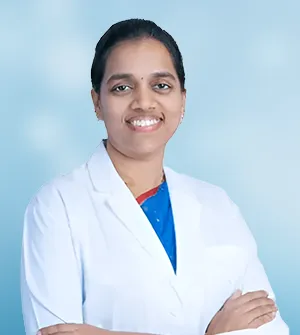
Dr. Navatha Mortha
Senior Consultant & Maxillofacial Surgeon
Dr. Mortha is a specialist maxillofacial surgeon at Gnathos Facial Surgery, Hyderabad, with advanced training in orthognathic surgery, TMJ surgery, and facial cosmetic surgery.