.png)



Accidents happen when we least expect them, and injuries to the face can be particularly distressing. Whether it is a sports injury, a fall, or a road accident, knowing how to handle Facial Trauma in the first few minutes can make a significant difference in recovery and long-term appearance. Facial trauma encompasses any physical injury to the face, including the jaw, nose, teeth, or skin. This guide provides essential first aid steps, treatment options, and expert advice to ensure you are prepared for any facial emergency.
What is Facial Trauma?
Facial trauma, also known as maxillofacial trauma, refers to any injury to the face or jaw. The face is a complex structure involving delicate bones, sensory organs, and intricate soft tissues. Damage can range from minor cuts and bruises to complex fractures of the jaw (mandible), nose (nasal bone), or cheekbones (zygoma). Because the face is vital for breathing, speaking, and eating, these injuries require immediate attention to prevent functional complications or permanent scarring.
Common Causes of Facial Injuries
Understanding the common reasons behind these injuries helps in prevention and better preparation.
- Road Traffic Accidents: These are the leading cause of severe maxillofacial fractures.
- Sports Injuries: High-impact sports like football, cricket, or boxing often result in nasal or jaw injuries.
- Falls: Elderly individuals and young children are particularly prone to facial injuries from accidental trips.
- Physical Altercations: Assaults often involve blunt force trauma to the eye sockets or jaw.
- Workplace Accidents: Industrial or construction site mishaps can lead to penetrating or crush injuries.
Symptoms of Facial Trauma
Not all injuries are visible on the surface. Look for these warning signs following an impact:
- Severe Swelling and Bruising: Rapid puffiness around the eyes or jawline.
- Numbness: A “pins and needles” feeling in the cheeks, lips, or chin, indicating nerve damage.
- Difficulty Breathing: Often associated with nasal fractures or internal swelling.
- Vision Changes: Double vision or inability to move the eye properly.
- Malocclusion: A feeling that your teeth no longer fit together correctly when closing your mouth.
- Bleeding: Persistent bleeding from the nose, mouth, or open lacerations.
Immediate First Aid Steps for Facial Trauma
In an emergency, stay calm and follow these life-saving steps:
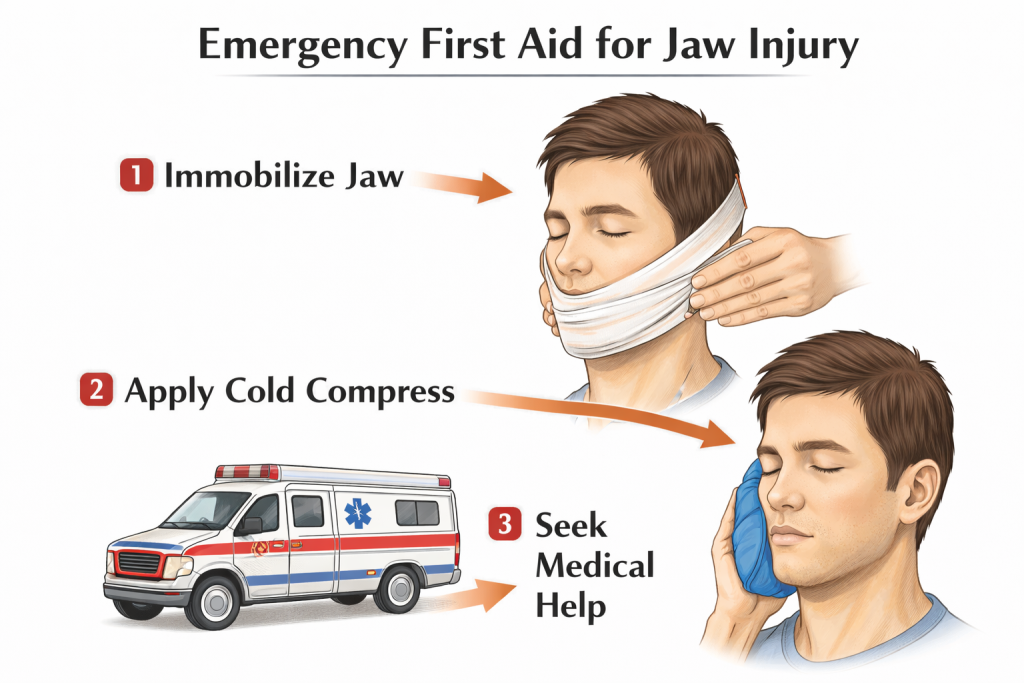
- Check Airway and Breathing: Ensure the victim can breathe. Remove any broken teeth or blood clots from the mouth.
- Control Bleeding: Apply firm, direct pressure to any bleeding area with a clean cloth or gauze.
- Stabilize Fractures: If you suspect a broken jaw, keep it still using a “barrel bandage” or a wrap around the head and chin.
- Manage Avulsed (Knocked-out) Teeth: If a tooth falls out, pick it up by the crown (not the root), rinse it gently with water, and place it in a container of milk or back in the socket if possible.
- Apply Cold Compresses: Use ice packs wrapped in a towel to reduce swelling and numb the pain.
Diagnosis and Medical Evaluation
At a specialized facility like Gnathos Dental & Facial Surgery, a detailed evaluation is crucial.
- Clinical Examination: A maxillofacial surgeon will check for bone stability and nerve function.
- Radiology: X-rays are the baseline, but a 3D CT Scan is the gold standard for mapping complex facial fractures.
- Vision Tests: If the eye socket (orbit) is involved, an ophthalmology review may be necessary.
Treatment Options
The treatment for Facial Trauma depends entirely on the severity of the injury:
- Soft Tissue Repair: Lacerations are cleaned and closed with fine sutures to minimize scarring.
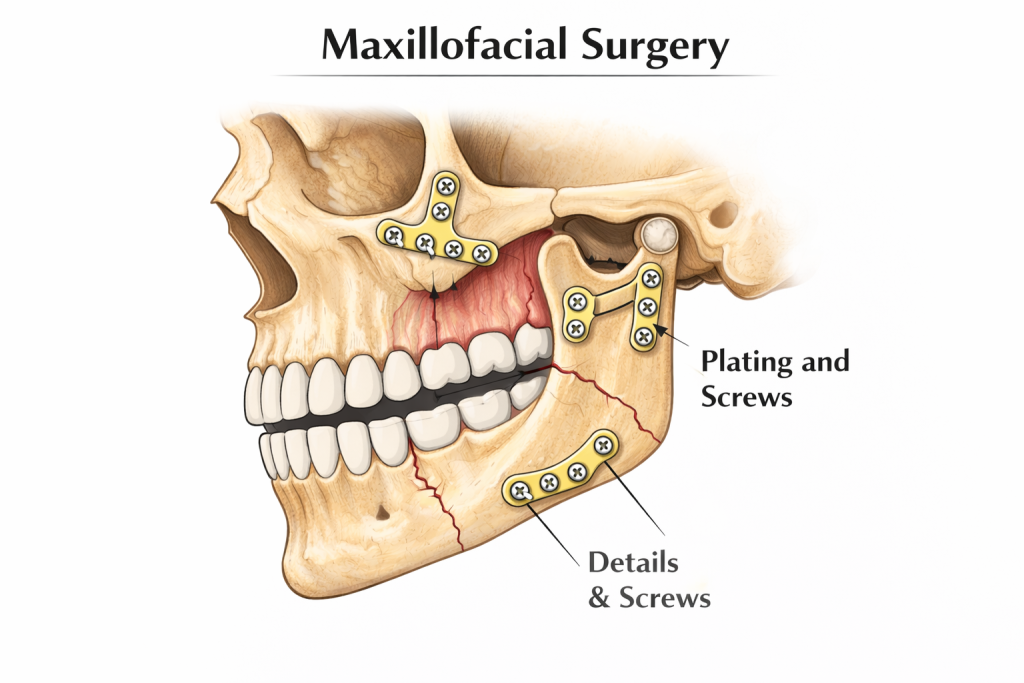
- Reduction and Fixation: For fractures, the bones must be put back in place (reduction) and held together (fixation) using tiny titanium plates and screws.
- Orthognathic Procedures: If the jaw alignment is permanently affected, corrective jaw surgery may be required later.
- Dental Restoration: Broken or lost teeth are managed with dental implants or bridges once the bone has healed.
Comparison: Minor vs. Major Facial Trauma
| Feature | Minor Trauma | Major Trauma |
|---|---|---|
| Examples | Bruises, small cuts, chipped teeth | Jaw fractures, orbital floor fractures, deep lacerations |
| Treatment | Ice, cleaning, simple dressings | Surgery, plating, hospitalization |
| Recovery Time | 3–7 days | 4–8 weeks |
| Specialist Needed | General Dentist/GP | Maxillofacial Surgeon |
Risks and Potential Complications
Delaying treatment for Facial Trauma can lead to long-term issues:
- Infection: Open wounds or fractures can become infected without proper antibiotics.
- Facial Asymmetry: Bones healing in the wrong position can change your appearance.
- Chronic Pain: Nerve damage or TMJ issues can lead to persistent discomfort.
- Loss of Function: Difficulty chewing, speaking, or a permanent change in vision.
Recovery and Prevention Tips
Healing from facial injuries requires patience and proper care:
- Follow a Soft Diet: Avoid hard or crunchy foods to allow jaw fractures to heal.
- Maintain Oral Hygiene: Use a soft-bristled brush and prescribed mouthwashes to prevent infection around surgical sites.
- Wear Protective Gear: Always wear helmets while riding and mouthguards during contact sports.
- Keep Head Elevated: Sleep with extra pillows to reduce post-surgical swelling.
When to See a Doctor
You should seek immediate help from a specialist in facial trauma if you experience:
- Persistent numbness in any part of the face.
- A change in your bite or difficulty opening your mouth.
- Persistent dizziness or blurred vision.
- Wounds that won’t stop bleeding.
Conclusion
Facial trauma can be a life-altering event, but with the right knowledge and timely intervention, most patients achieve a full functional and aesthetic recovery. Remember that the first few minutes are critical—control the bleeding, stabilize the area, and seek expert care immediately. Modern surgical techniques ensure that even complex fractures can be repaired with minimal visible scarring. Don’t ignore a facial injury. If you or a loved one has suffered an impact to the face, consult a specialist at Gnathos Dental & Facial Surgery to ensure a safe and effective recovery.
FAQ
How long does it take for a facial fracture to heal?
Generally, facial bones take about 6 to 8 weeks to heal completely. However, soft tissue swelling and bruising usually subside within 2 to 3 weeks.
Will I have permanent scars after facial surgery?
Maxillofacial surgeons are trained to place incisions in natural skin creases or inside the mouth to make scars as invisible as possible. Proper post-operative wound care also plays a huge role in minimizing scarring.
Can a broken jaw heal on its own?
While bones eventually knit together, they may do so in the wrong position without medical intervention. This can lead to permanent chewing problems and facial deformity. Professional “reduction” is always recommended.
What should I do if a child hits their face and their tooth is loose?
Do not pull the tooth. Have the child bite down gently on a piece of gauze to stabilize it and visit a dental specialist immediately to check for root damage.
Are titanium plates removed after the face heals?
In most cases, titanium plates and screws are biocompatible and stay in the body permanently without causing any issues. They are only removed if they become palpable or cause an infection.
Does health insurance cover facial trauma treatment?
Most health insurance policies cover the treatment of accidental facial injuries and fractures as they are considered medically necessary reconstructive procedures.