.png)


Early detection is the single most important factor in surviving oral malignancies. Many people mistake the initial warning signs of oral cancer for minor issues like mouth ulcers or a burnt tongue. However, failing to recognize these symptoms can lead to the disease spreading to the lymph nodes and other parts of the body. Understanding what to look for and when to seek professional help can literally save your life. This guide will walk you through the essential symptoms, risk factors, and modern treatment options available for effective management and recovery.
What is Oral Cancer?
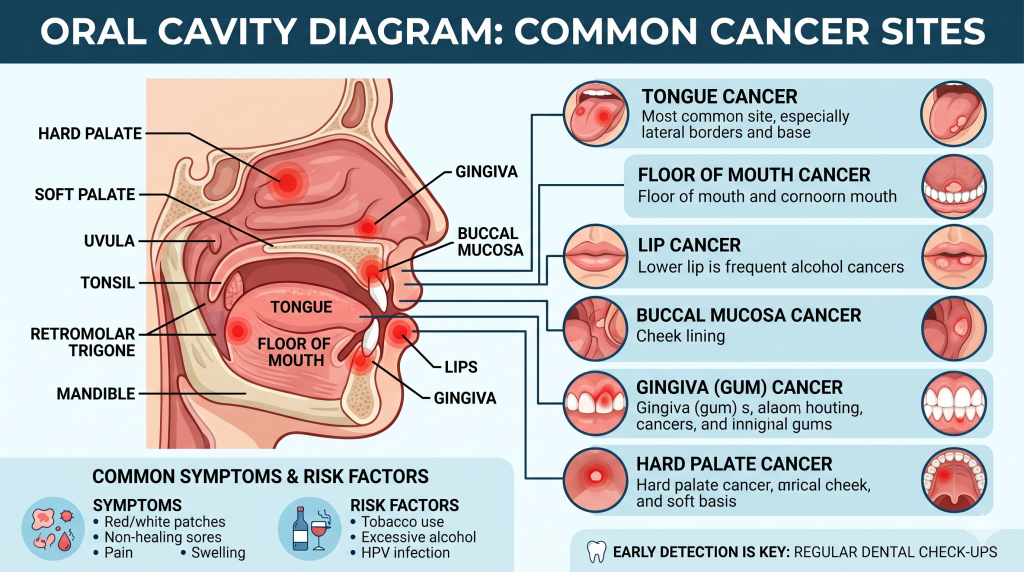
Oral cancer, also known as mouth cancer, belongs to a larger group of cancers called head and neck cancers. It occurs when cells on the lips or in the mouth develop changes (mutations) in their DNA. These mutations allow the cells to grow and divide uncontrollably, forming a tumor. It can develop on the tongue, the lining of the cheeks, the roof of the mouth, or the gums. While it is a serious condition, it is highly treatable if caught in its earliest stages.
Primary Causes and Risk Factors
While anyone can develop oral malignancies, certain lifestyle choices and biological factors significantly increase the risk.
- Tobacco Use: Smoking cigarettes, cigars, or pipes, as well as using chewing tobacco, is the leading cause.
- Alcohol Consumption: Heavy and frequent alcohol use is a major risk factor, especially when combined with tobacco.
- HPV Infection: The Human Papillomavirus (HPV), particularly strain 16, is increasingly linked to cancers of the back of the throat.
- Sun Exposure: Excessive exposure to the sun can lead to cancer on the lip area.
- Poor Diet: A diet lacking in fruits and vegetables may weaken the body’s immune response to cellular mutations.
Key Warning Signs of Oral Cancer
Recognizing the warning signs of oral cancer requires a vigilant eye during your daily oral hygiene routine. Most symptoms are persistent and do not heal on their own within two weeks.
Persistent Sores or Lumps
The most common symptom is a sore in the mouth or on the lip that does not heal. Unlike a standard canker sore, these are often painless initially but may bleed easily. You might also feel a lump or thickening of the skin or lining of your mouth.
Red or White Patches
Keep an eye out for changes in the color of your oral tissues. Erythroplakia (red patches) and Leukoplakia (white patches) are abnormal cell growths that can be precancerous. If you notice velvety red or thick white spots on your tongue or gums, consult a specialist immediately.
Difficulty Moving the Jaw or Tongue
You might experience a sensation that something is caught in your throat, or find it difficult to chew, swallow, or speak. Persistent jaw pain or swelling that causes dentures to fit poorly is another red flag.
Diagnosing Mouth Cancer
If you notice any of the warning signs of oral cancer, a clinical evaluation is necessary. Specialists at Gnathos Dental & Craniofacial Centre use a systematic approach to diagnosis:
- Physical Exam: A thorough inspection of the lips, tongue, and throat for abnormalities.
- Biopsy: A small sample of tissue is removed from the suspicious area and examined under a microscope.
- Imaging Tests: X-rays, CT scans, or MRIs help determine if the cancer has spread to the jawbone or neck.
- Endoscopy: A small camera is used to check the back of the throat and larynx.
Advanced Treatment Options
The treatment plan depends on the stage, location, and type of cancer. A multidisciplinary approach is usually the most effective.
- Surgical Resection: The primary treatment involves removing the tumor and a margin of healthy tissue. In some cases, maxillofacial surgery is required to reconstruct the area.
- Radiation Therapy: High-energy beams are used to kill cancer cells, often after surgery to ensure no microscopic cells remain.
- Chemotherapy: Drugs are used to shrink tumors or kill remaining cancer cells, often used in conjunction with radiation.
- Targeted Therapy: Modern drugs that target specific proteins in cancer cells to stop them from growing.
Comparison: Oral Cancer Stages vs. Treatment Focus
| Stage | Description | Primary Treatment Focus |
|---|---|---|
| Stage I & II | Small tumor, hasn’t spread. | Localized Surgery or Radiation. |
| Stage III | Larger tumor or spread to one lymph node. | Combination of Surgery and Radiation. |
| Stage IV | Spread to distant organs or multiple nodes. | Multimodal (Surgery, Chemo, Radiation). |
Potential Risks and Side Effects
Undergoing treatment for oral cancer can impact your daily functions. Common side effects include:
- Dry mouth (Xerostomia) due to radiation.
- Changes in taste or difficulty swallowing.
- Stiffness in the jaw (Trismus).
- Scarring from corrective jaw procedures. Most of these side effects can be managed with specialized dental care and speech therapy during recovery.
Recovery and Prevention Tips
Prevention is always better than cure. By making healthier choices, you can drastically reduce your risk profile.
- Quit Tobacco: This is the most effective way to lower your risk.
- Limit Alcohol: Moderation is key to maintaining healthy oral mucosa.
- Eat a Balanced Diet: Focus on antioxidants found in brightly colored fruits and vegetables.
- Regular Dental Checkups: Dentists are often the first to spot the warning signs of oral cancer during routine cleanings.
- Practice Sun Safety: Use lip balm with SPF when outdoors.

When to See a Doctor
You should schedule a consultation with an oral and maxillofacial surgeon if any of the following symptoms last for more than two weeks:
- A sore or ulcer that refuses to heal.
- Constant pain in the mouth or ear.
- Numbness in the tongue or lower lip.
- A persistent “sore throat” feeling without an infection.
- Change in voice or hoarseness. Early intervention is the key to a successful outcome. If you are concerned about a persistent spot or lump in your mouth, do not wait for the pain to start.
Conclusion
Being aware of the warning signs of oral cancer is the first step in proactive health management. While these symptoms can often be caused by less serious conditions, only a medical professional can provide a definitive diagnosis. Taking action early ensures that you have the widest range of treatment options and the highest chance of a full recovery. Your oral health is a gateway to your overall well-being; treat it with the attention it deserves. Protect your smile and your health. If you notice anything unusual in your mouth, book an appointment with the experts at Gnathos Dental & Craniofacial Centre for a comprehensive screening.
FAQ Section
Is oral cancer painful in the beginning?
Often, the initial warning signs of oral cancer are completely painless. This is why many people ignore them. Pain usually develops as the tumor grows or begins to ulcerate.
Can a dentist detect oral cancer?
Yes, dentists are trained to perform oral cancer screenings. They look for red/white patches and feel for lumps during your regular dental checkup.
How fast does oral cancer spread?
The speed varies depending on the type of cancer, but many oral cancers can spread to the lymph nodes in the neck relatively quickly, making early detection vital.
Can oral cancer be cured?
When detected in the early stages (Stage I or II), oral cancer has a very high cure rate. Success rates decrease as the cancer reaches more advanced stages, which is why monitoring symptoms is critical.
Does an oral ulcer always mean cancer?
No, most mouth ulcers are aphthous ulcers (canker sores) caused by stress or minor injury. However, if an ulcer does not heal within 14 days, it must be examined by a specialist.
What does an oral cancer lump feel like?
An oral cancer lump often feels firm or hard and is typically fixed in place rather than moving around under the skin. It may or may not be tender to the touch.